Ag Chat from 6/3/26: Insecticidal soaps for garden pest control
From our Small Farms Agent , Anass Banna
Insecticidal soaps have many advantages when compared to other insecticides. They are inexpensive to use, are among the safest pesticides, leave no harsh residue, are natural products that are virtually non-toxic to animals and birds, and can be used on vegetables up to harvest. In addition, most beneficial insects are not harmed by soap sprays.
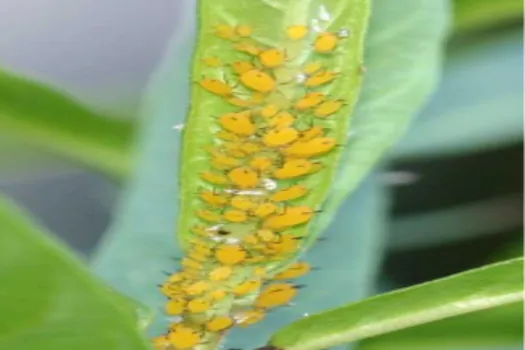
NC State Aphids
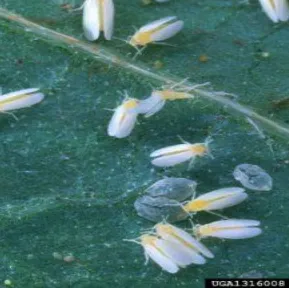
Small, soft-bodied insects such as aphids, mealybugs, thrips, scale crawlers, and spider mites are most susceptible to the soaps. Insecticidal soaps kill by suffocation, they appear to disrupt the cellular membranes of the insect, and they remove protective waxes that cover the insect, resulting in dehydration. Insecticidal soaps are also an effective leaf wash to remove honeydew, sooty mold, and other debris from leaves.
Silverleaf Whiteflies USDA Agriculture research service
Soaps are made when the fatty acid portion of either plant or animal oils are joined with a strong alkali. They are potassium salts of fatty acids. Commercial insecticidal soaps are a highly refined version of liquid dish soap. While you could make your insecticidal soap mixture, there is a substantially increased risk of plant injury with them. Dry dish detergent and all clothes-washing detergents are far too harsh to use on plants because of all the additives in them. Some soaps and detergents are poor insecticides, and other additives in these products may be phytotoxic (i.e., they may damage the plant).
Some plants are sensitive to soap sprays and may be seriously injured by them. Read the label to make sure your plant is not one of them.
Sensitive plants include portulaca, hawthorn, cherries, plum, horse chestnut, Japanese maple, bleeding heart etc.
To test for plant sensitivity, spray a small area and wait 24 hours to see if any damage occurs. Plants under water stress should not be sprayed.
Application
As with anything applied to plants, it is important to read the entire label and carefully follow the directions. Insecticidal soaps are usually used as a 1 to 2% solution (2½ to 5 tablespoons per gallon). Always follow the label for the product you are using.. Do not apply the soap in full sun or at temperatures above 90 ºF as this may damage the plants. The only disadvantages of insecticidal soaps are associated with the limitations of their nature.
- The soap solution must wet the insect during application.
- There is no residual effectiveness because soap dries or is washed away.
- There is a potential for phytotoxicity when the soap residue is affected by high temperatures.
Insecticidal soaps can be found where garden supplies are sold. They are available as either a concentrate or as a pre-mixed RTU (Ready to Use) spray bottle. Some commonly available insecticidal soap brands are:
- Bonide Insecticidal Soap RTU
- Espoma Organic Insect Soap RTU
- Garden Safe Insecticidal Soap Insect Killer RTU
- Miracle-Gro Natures’s Care Insecticidal Soap RTU
There are brands of insecticidal soap that contain an additional active ingredient such as neem oil, pyrethrin, sulfur, or Spinosad. These are all-natural insecticides and can aid in pest control.